Mojave High-Wind Emergency Roof Tarping in Las Vegas, NV
24/7 emergency roof tarping dispatch in Las Vegas, NV. Heavy-duty 10-mil woven poly tarps, 2x4 lumber battens, and tie-down protection engineered for 70+ MPH desert windstorms.
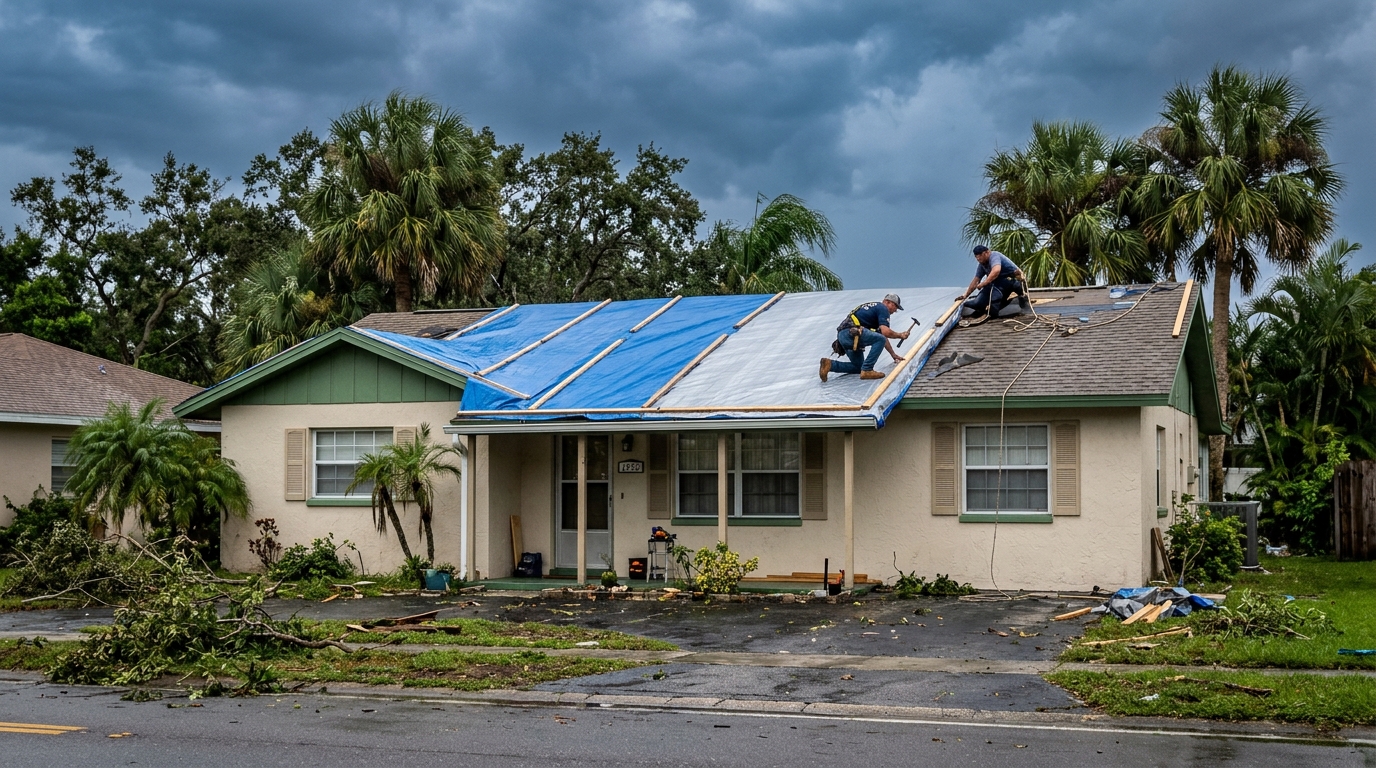
Engineered High-Wind Tarping for Mojave Desert Storms
When violent desert microbursts, canyon gap winds flowing through the Spring Mountains, or severe monsoon downbursts barrel across the Las Vegas Valley, gusts exceeding 65 to 80 MPH routinely dislodge concrete roof tiles, rip ridge mortar, and expose underlying felt to blowing dust and rain. Ordinary retail blue tarps secured with masonry nails or bricks tear apart within minutes under intense desert wind turbulence, causing secondary puncture damage across sound tiles. Our emergency dispatch network connects Las Vegas property owners with specialized roofing crews skilled in engineered high-wind roof tarping protocols that protect structural building envelopes until permanent insurance restoration can take place.
Key Technical Engineering Protocols – Emergency Roof Tarping
- Rapid Emergency Triage: Direct telephone-to-technician dispatch across all Las Vegas, Henderson, and Clark County zip codes with zero web form delays.
- Non-Destructive Moisture Tracing: Calibrated FLIR infrared thermography and electronic impedance scanners to isolate subterranean leaks without destructive deck tearing.
- High-Temperature Compliance: Full conformance with 2021/2024 International Residential Code (IRC) R905 high-heat underlayment standards (ASTM D1970).
- Licensed Nevada Contractors: Vetted independent roofing professionals carrying verified active Nevada State Contractors Board (NSCB) C-15 licenses.
- Transparent Carrier Documentation: Standardized forensic photo packets, Haag-methodology test square documentation, and Xactimate line-item estimates aligned with insurance adjuster guidelines.
1. Mojave Wind Turbulence and Tile Aerodynamics
The Las Vegas Valley topography creates localized wind acceleration corridors where desert winds funnel through mountain passes toward residential subdivisions in Summerlin, Mountain's Edge, and Centennial Hills. These winds generate extreme negative pressure vortices along windward eaves, hip ridges, and gable rakes. When gusts lift loose tiles, positive upward pressure combines with aerodynamic suction above, ripping tiles free and shredding underlying felt. Dispatched emergency crews understand these complex aerodynamic vectors and design tarping installations specifically to resist high-velocity desert uplift forces.
2. 10-Mil Heavy-Duty Polyethylene and 2x4 Batten Mechanical Anchoring
Standard retail blue tarps lack tensile strength and rapidly degrade under intense Mojave ultraviolet radiation. Dispatched technicians deploy commercial-grade, UV-stabilized 10-mil woven polyethylene tarps engineered for extreme weather resilience. Rather than relying on fragile metal grommets, crews sandwich tarp perimeter edges inside kiln-dried 2x4 lumber battens. The tarps are wrapped around the lumber multiple times before being secured to structural roof rafters with 3.5-inch exterior wood screws fitted with neoprene washers, distributing wind load evenly across structural framing members without tearing the waterproof sheet.
3. Ridge-Over Wrapping and Water Shedding Geometry
Improper tarping traps runoff behind upstream edges, turning the tarp into a funnel that pours thousands of gallons of water into attic spaces. Our dispatched professionals always extend the top edge of the tarp completely over the roof ridge, anchoring battens on the leeward, undamaged slope. Where dormers, chimneys, or multi-pitch hips intersect the tarp field, technicians install custom cricket diverters and continuous vertical side-battens, ensuring all water sheds naturally toward perimeter gutters without penetrating under tarp seams.
4. Non-Destructive Tile Fastening and Surface Preservation
Amateur tarp installers frequently drive hundreds of nails directly through brittle concrete tiles, shattering expensive roofing materials and multiplying repair costs. Dispatched contractors employ non-destructive fastening techniques that isolate mechanical anchors to already exposed sheathing areas whenever feasible. Around preserved tile sections, technicians utilize specialized foam-padded roofing ladders, ridge-hook scaffolds, and weighted sandbag ballasts to secure membranes safely without cracking surrounding tiles.
5. Insurance Forensic Documentation and Carrier Alignment
Emergency tarping is the first and most critical step in protecting an insurance claim under Nevada property casualty rules. Incomplete or missing photo documentation can lead adjusters to dispute pre-existing conditions versus storm-induced damage. Dispatched crews conduct an exhaustive 360-degree forensic photo and video audit before unrolling tarps, capturing close-up wind-displaced tile profiles, fractured corners, exposed underlayment tears, and collateral soft-metal impacts. All documentation and emergency mitigation invoices are packaged directly for your insurance carrier under standard dwelling coverage.
Need Immediate Assistance with Emergency Roof Tarping in Las Vegas?
Zero forms, zero waiting. Connect directly with an emergency roof dispatch specialist to route licensed Clark County crews to your property.
CALL NOW: (888) 208-4155Frequently Asked Questions – Emergency Roof Tarping in Las Vegas
How long can an emergency roof tarp stay on a Las Vegas home?
Our dispatched contractors install commercial-grade 10-mil UV-resistant tarps secured with screwed 2x4 lumber battens designed to withstand 70+ MPH winds and up to 90 days of intense desert solar exposure. This provides ample time for insurance adjusters to complete on-site evaluations, issue claim payouts, and schedule permanent roof restoration.
Does homeowners insurance pay for emergency roof tarping in Clark County?
Yes. Standard Nevada homeowners insurance policies include a duty to protect property clause requiring policyholders to prevent ongoing interior damage. Insurance carriers cover the full cost of professional emergency tarping under the policy mitigation coverage, typically with zero out-of-pocket deduction.
Will tarping my roof damage the tiles that were not broken by the storm?
Dispatched professionals use ridge-over wrapping, sandbag ballasting, and non-penetrating perimeter anchoring methods specifically designed to preserve undamaged tile courses. They avoid haphazard nailing that ruins healthy roofing materials.